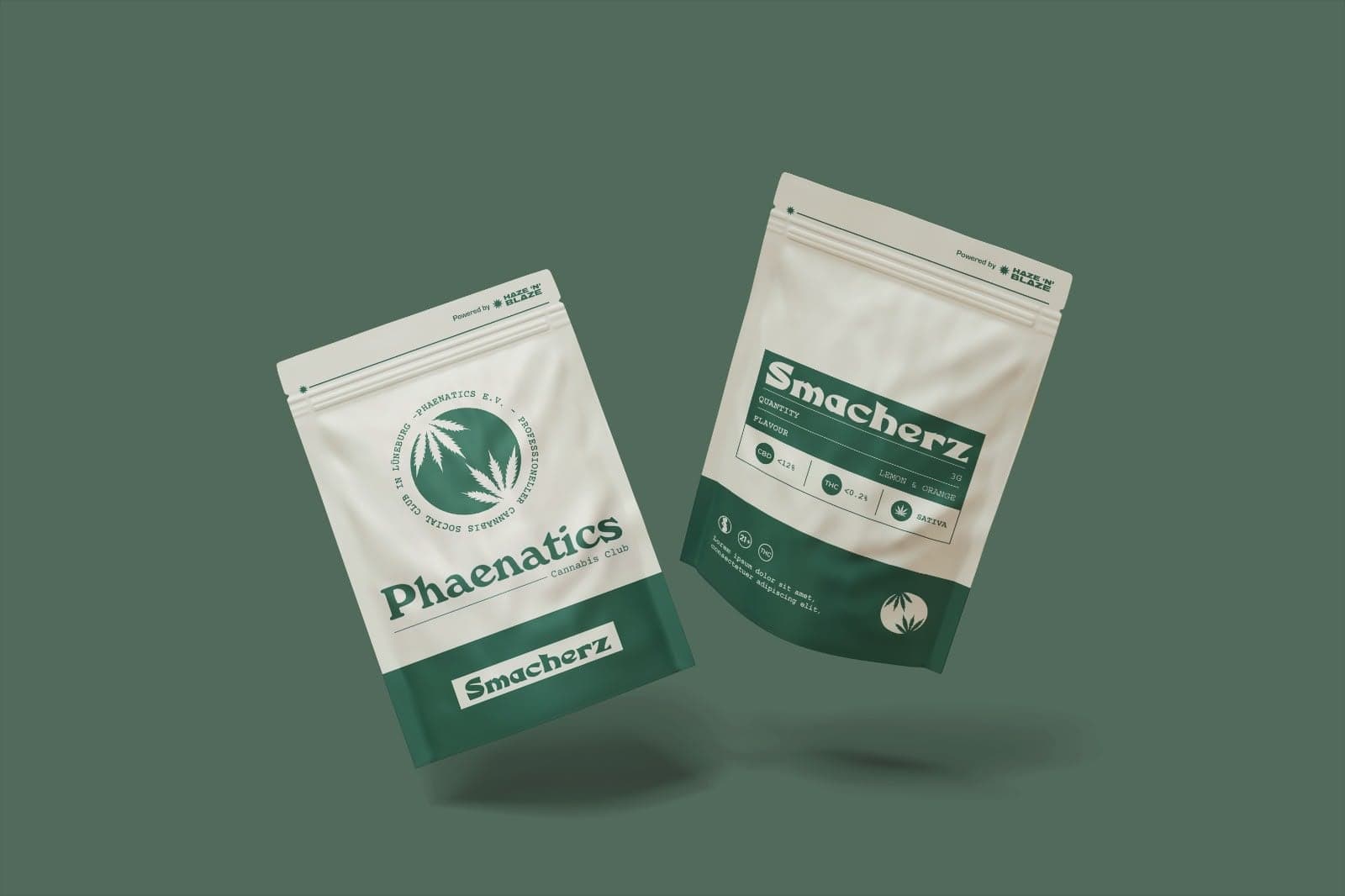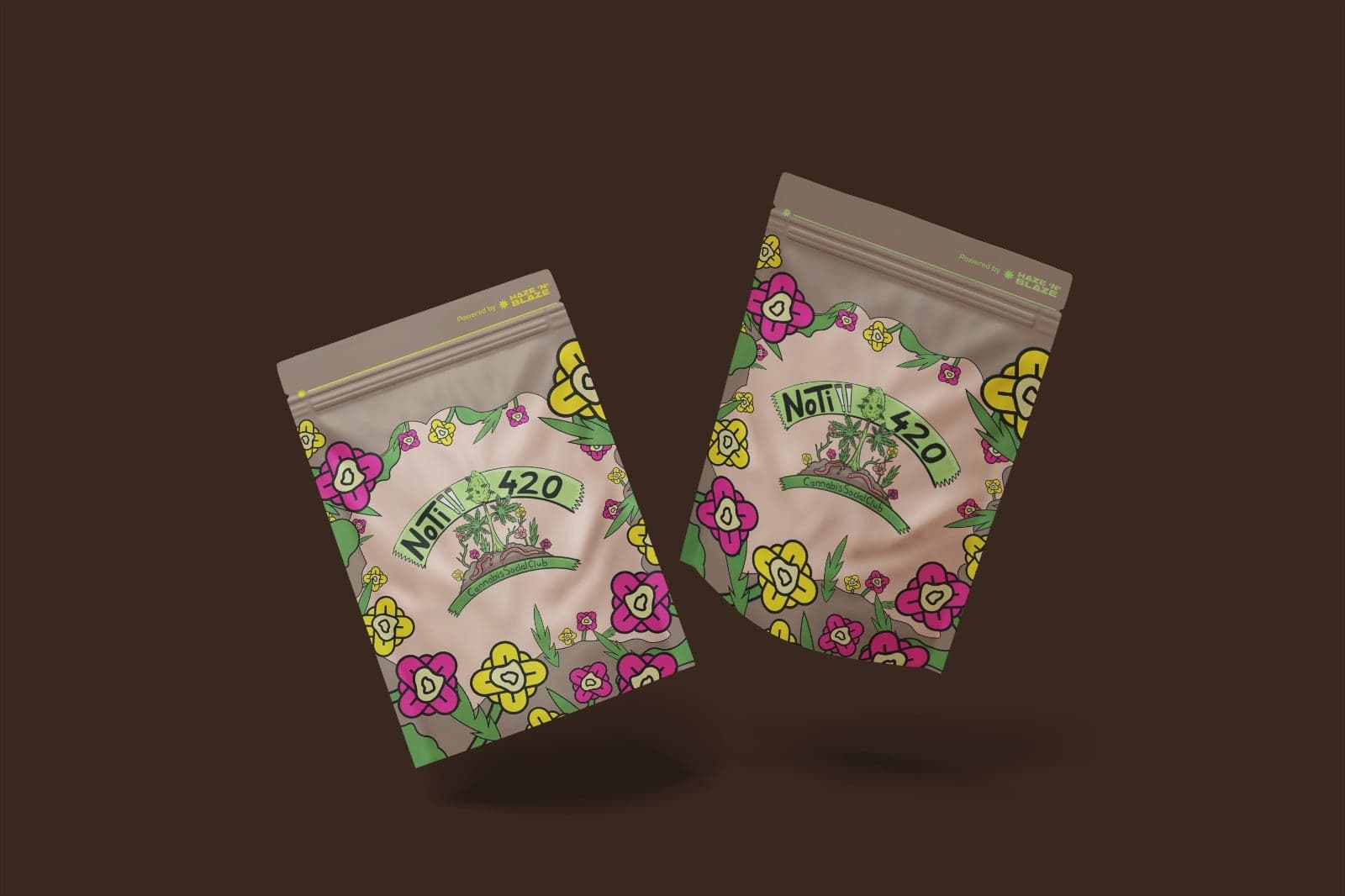
Child resistant mylar bags deserve a closer look than a logo preview. For a club or packaging buyer, the useful questions are practical: which format fits your brief, what supports the closure claim, and what needs checking before you approve artwork? A clear specification helps you discuss those questions with your supplier before production starts.
At Haze 'N' Blaze, our catalogue lists custom Mylar pouches in three approved formats, with artwork submitted for a production quote. This guide gives you a checklist for that conversation. It focuses on packaging selection and artwork approval, so you can keep product facts, supporting documents and design decisions together.
Child resistant mylar bags: start with the evidence
Treat a child-resistant description as a claim to verify for the exact pouch you intend to order. Ask which closure and format the supporting documentation covers. Keep that answer alongside the production specification, rather than relying on a screenshot or a description copied from a different product.
For context, ISO 8317 describes performance requirements and testing for reclosable child-resistant packaging, including access by adults. Referencing that standard does not establish that a particular pouch has passed its tests. Our live catalogue describes the pouches as child resistant, but does not include a test report or certification number.
Before using a certification badge or naming a test standard in your artwork, request the relevant documentation and have your responsible reviewer check it. Keep unsupported claims out of the design while that review is pending. A tidy approval process makes it easier to explain exactly what you ordered and what evidence you received.
Match the approved format to your brief
The current custom Mylar pouch catalogue lists these options:
- 100 × 70 mm, listed with a 1–2 g capacity.
- 127 × 101 × 50 mm, listed with a 3.5–5 g capacity.
- 140 × 100 × 50 mm, listed with a 7 g capacity.
Use these as the starting points for your enquiry. Ask your supplier to confirm which format suits your intended contents and packing process. A listed capacity is useful for comparison; you should still resolve fit with the supplier before treating the format as approved for your own brief.
Write the selected dimensions into the artwork brief and quote request. If you are comparing two formats, name both clearly and request the relevant artwork templates. That keeps the design discussion attached to a specific pouch rather than a general description such as small, medium or large.
Separate material facts from closure claims
Our catalogue lists a thickness of 240 microns and describes the pouches as smell proof. It also lists child resistance. Record those as separate supplier statements: a material thickness does not, by itself, provide evidence for a closure claim or a particular certification.
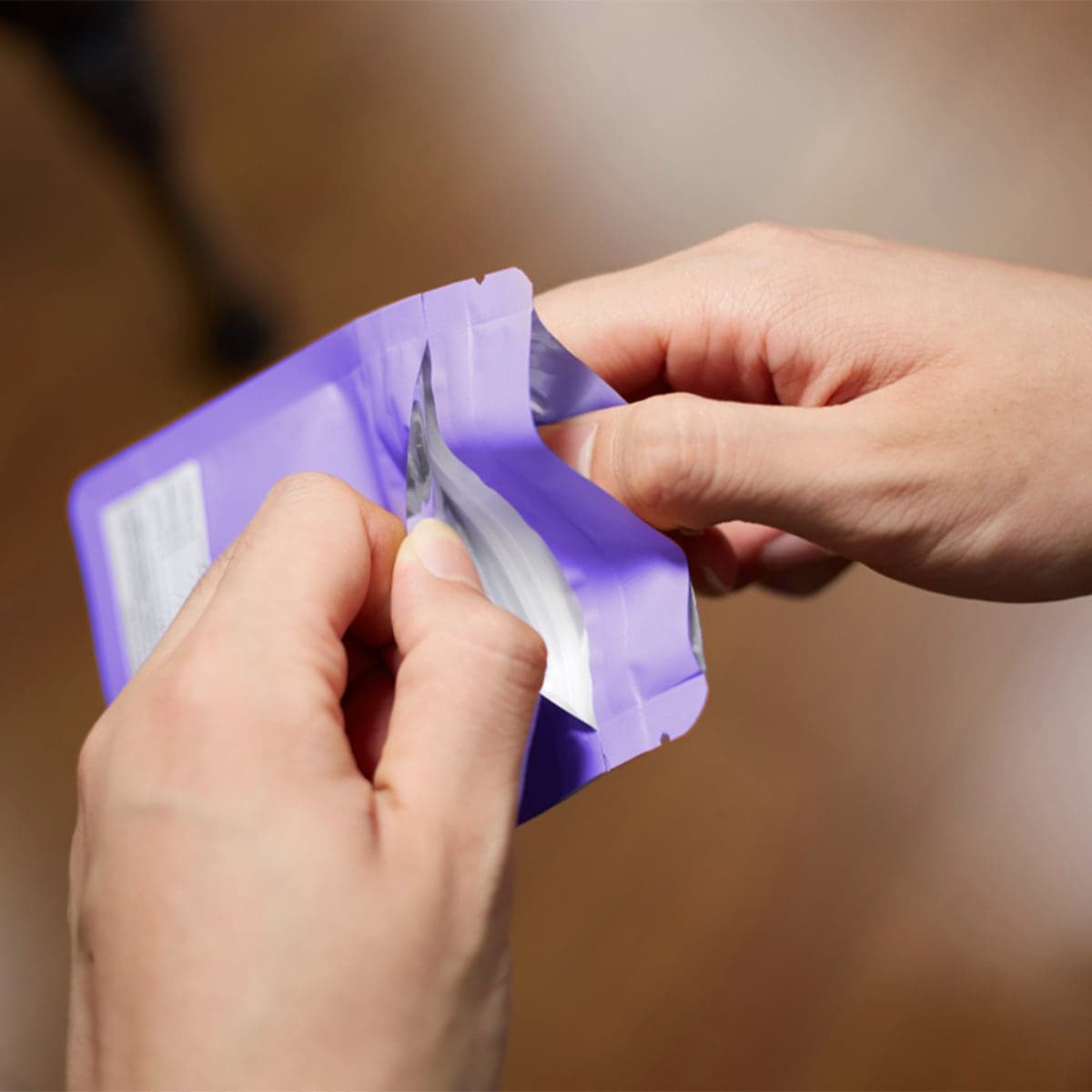
When reviewing a sample, ask for the intended opening and closing instructions. Have the people responsible for your packaging workflow review whether those instructions are clear. This practical review helps you identify questions for the supplier; it does not replace documented testing or establish compliance with a market's requirements.
Keep your sample notes specific. Record the format, the sample reference and any unresolved questions. Avoid turning an informal handling check into a claim such as certified, universally compliant or guaranteed. Those words need evidence that is separate from your impression of the pouch.
Give your designer a usable artwork brief
The catalogue specifies custom logo printing at the bottom of the bag. Start the design conversation with that placement and the selected format. Request the supplier's current template, then confirm the available print area, margins and any production restrictions before your designer prepares the final file.
Use a short approval checklist:
- Name the exact format and artwork version.
- Confirm the logo placement against the supplier's template.
- Reserve space for text your responsible reviewer approves.
- Check spelling, contrast and readability at the intended size.
- Remove unsupported badges, certificates and performance claims.
- Obtain written approval of the final production proof.
Keep the packaging design directed at adult professional buyers. Avoid illustrations or presentation that could appeal to children. If your brief needs market-specific wording, have the responsible person review that wording before approval. This is a packaging planning guide, not legal advice or a statement that one design meets every market's rules.
Prepare a quote request that answers the basics
Send the selected format, required quantity, artwork status and delivery destination together. Include your target date as a planning request. The catalogue currently lists a four-week production lead time; ask when that period starts and confirm the production schedule and delivery arrangements in your quote.
If the artwork is unfinished, say what is ready and what still needs work. If you need supporting documentation for the closure claim, request it in the same message. Keeping those questions together helps you review the quote as a complete specification rather than approving separate details in different conversations.
Our club packaging solutions page is a starting point for discussing a wider packaging brief. For this pouch enquiry, keep the request focused on the approved format, logo placement, supporting documents and production proof. You can then assess the supplier's response against the same checklist.
Frequently asked questions
Does the catalogue prove ISO certification?
No. It describes the pouches as child resistant, but does not provide an ISO certificate or test report. Ask for documentation for the exact format and closure before making a certification claim.
Is the four-week production time a delivery promise?
The catalogue lists a four-week production lead time. Confirm its starting point, the agreed schedule and transport arrangements in the quote rather than assuming it is an arrival date.
What should we send first?
Send your preferred format, quantity, destination and artwork status. Add any documentation questions and identify who will approve the final proof. That gives the discussion a clear starting point.